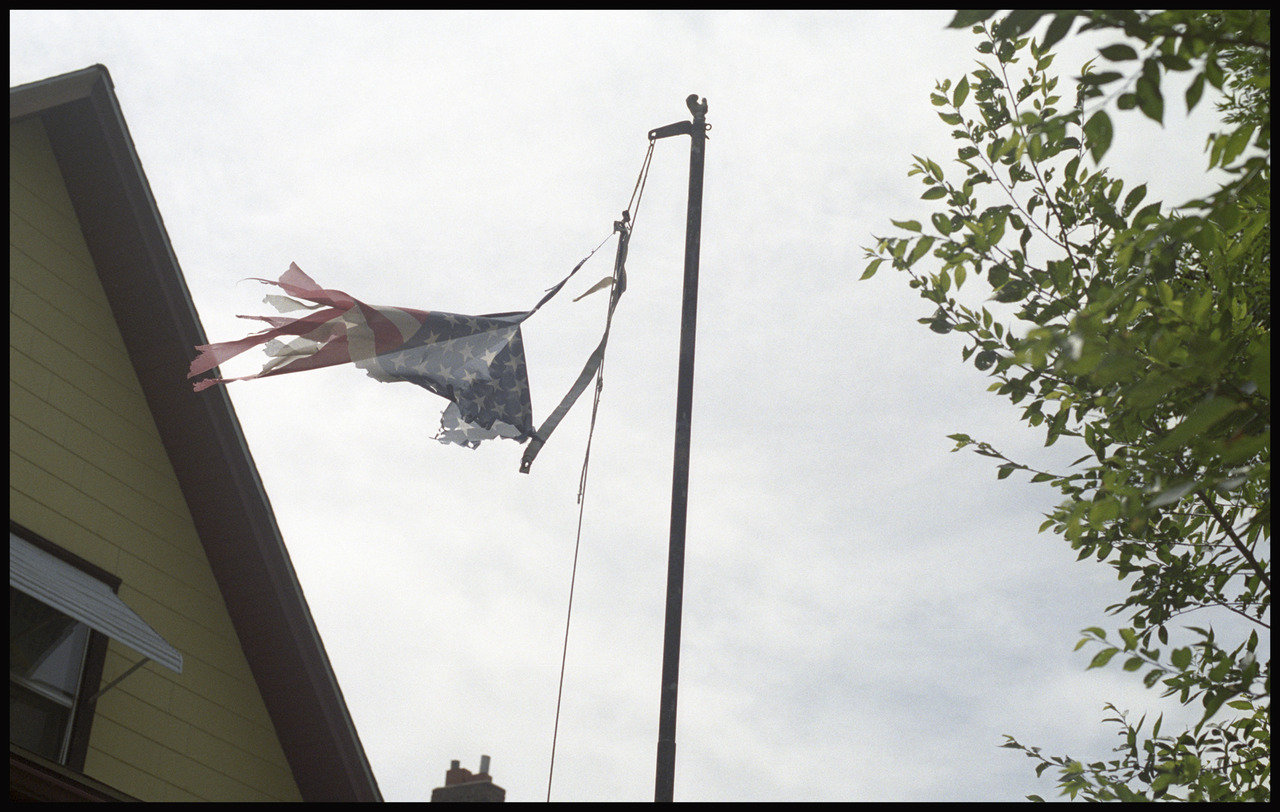
Based on the picture I selected, Wing Young Huie presents the concept of "othering" through the format in which the picture was taken and in the way that the color presents itself in the picture. This picture was taken from an angle with the camera facing more towards the sunlight that was blocked by the house. This format places more emphasis on the area surrounding the flag than the flag itself aiding the concept of "othering" by taking away the importance of the flag which is suppose to be the main focus of the picture. He also presents the concept of "othering" through the color in the photo. The color within the picture is not very saturated creating a washed out effect. This presents the concept of "othering" because the faded appearance represents how groups of people or places are treated as if their differences are something that sets them aside in a negative manor.
Margaret Atwood presents the concept of "othering" through the reoccurring implication of social classes throughout the book. There is a clear distinction of social classes within the The Handmaid's Tale. The highest class of women are the wives, and then the handmaids, aunts, Martha's, econowives, and at the very bottom, the unwomen. The handmaids are taught from day one that one does not want to end up being declared an unwoman or even being an econowife: "Go to the Colonies, Rita said. They have the choice. With the Unwomen, and starve to death and Lord knows what else" (Atwood, 10). The tone of Rita in this quote gives the audience the impression that the Unwomen are inferior to everyone else and because of this they are the group that is alienated in the Republic of Gilead.

This comment has been removed by the author.
ReplyDeleteSydney-
ReplyDeleteConcise response- you provided a close examination and also considered the effects of Huie's choices on an audience. You also treated all parts of the prompt equally and gave textual evidence from THT to support your assertions.