Sunday, November 22, 2015

Sunday, November 8, 2015
IBArt
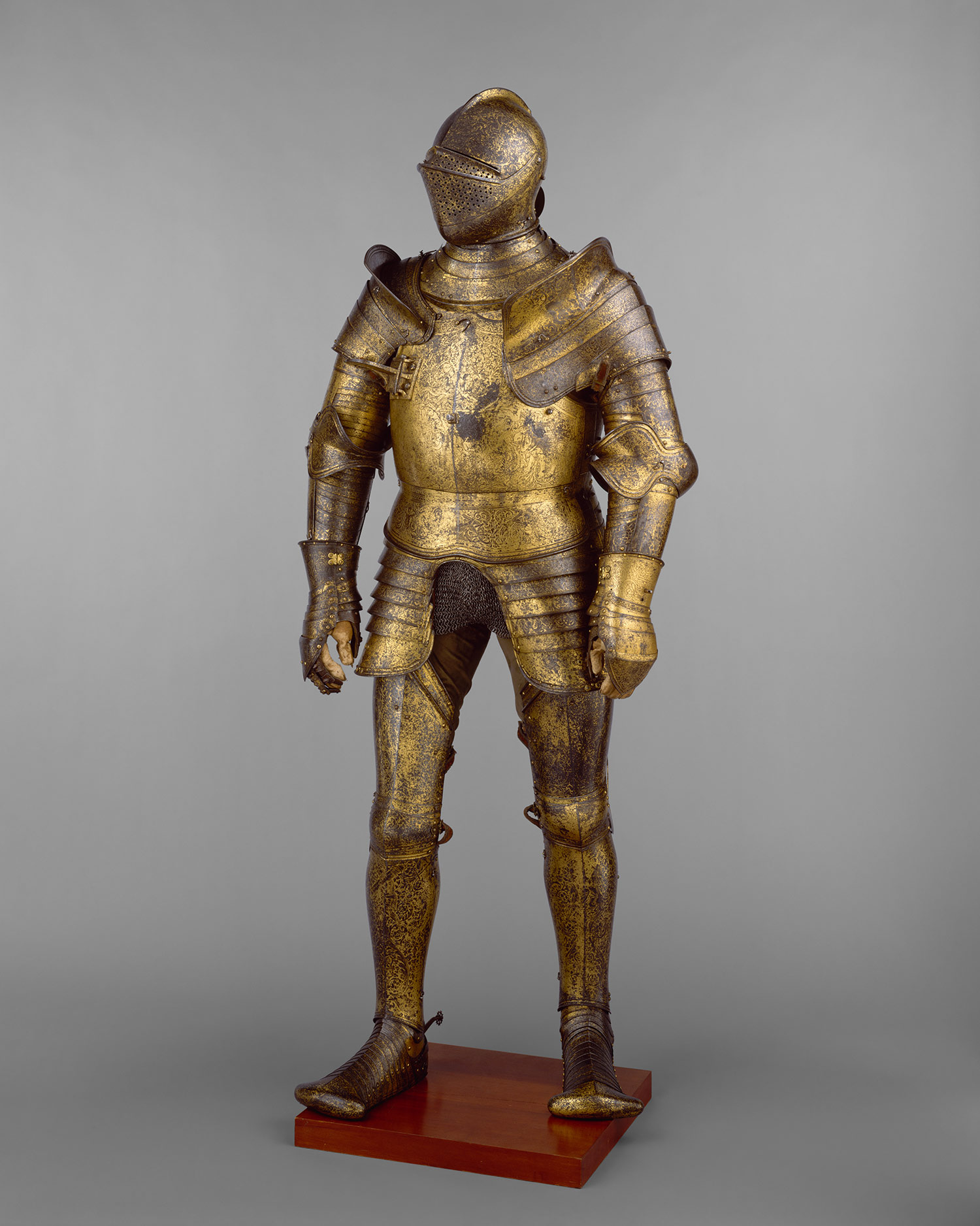
- Artist: Swiss artist Hans Holbein the Younger
- Title: Armor for Field and Tournament
- Date:1527
- Medium: Steel, etched and gilded overall
- Size: 73in (185.5cm)
- Created in 1527 at the Royal Workshops in Greenwich, England during the transition from Renaissance to Neoclassicism. It is considered the earliest surviving Greenwich garniture.
- This garniture represents the armor made from a series of exchange and reinforcing pieces that could be used in different ways during battle. The idea is that this armor would be more efficient during battle and would also be adequate enough for other leisure activities such as jousting.
- The rustic look of the piece is something that developed with age, but with the etching on the steel and the gilding as well, it features the subtle details of the piece. The piece is arranged in a way so it can be presented to someone as a model. Such an arrangement allows every detail to be viewed so that if it were to be presented back in the 1500's it would be able to be used more as a prototype rather than a piece of art. There are also elements of the piece that would not have typically been included in a knight armor for battle, such as the ventral plate which was worn under the breast plate to decrease the amount of weight supported by the shoulder. This is something that was seen in only one other piece of armor. Features such as this enhance the meaning because they show the difference between pieces of armor made for battle and armor made for jousting. It also shows the influence that the king had on what the knights wore and how they we able to respond in battle.
- This model was created because Henry VII requested it either for himself or to be shown to the French ambassador Francois de La Tour d'Auvergne viscount of Turenne. This reflects the social values of the time because this piece was created at the order of Henry VII, which presents the concept of social hierarchy known as Feudalism at that time. The king was on top and the Knights were right above the peasants. The meaning of this piece is to show kings had anything and anyone at their disposal and they were able to use that to their advantage in any situation. I came to this conclusion through reading that this piece was created because King Henry VII ordered it to be made, which emphasizes just how influential the king was in the feudal system. Another theme addressed would be the knights role in society. Even though they were not very high in the feudal system, through this piece there is a sense that knights are very important because they were highly valued in battle and were often treated better than other citizens. In a way they also played the role of police officer in society because they upheld the law. Materialistically this artwork is very valuable because it is the earliest surviving Greenwich garniture. This piece signifies something different today because it is viewed as a piece of art rather than a prototype that would have been used to present a new idea.
Subscribe to:
Comments (Atom)